I build cables and rigs to measure — recorders that run through a festival night, breakout cables for the recording bag. Out of passion, but above all because they have to be useful.
Cases, cables and software you cannot buy like this — built for the problem that needed solving. Have a look at what is in use.
Four examples
Festival · DJ booth
The Booth Recorder
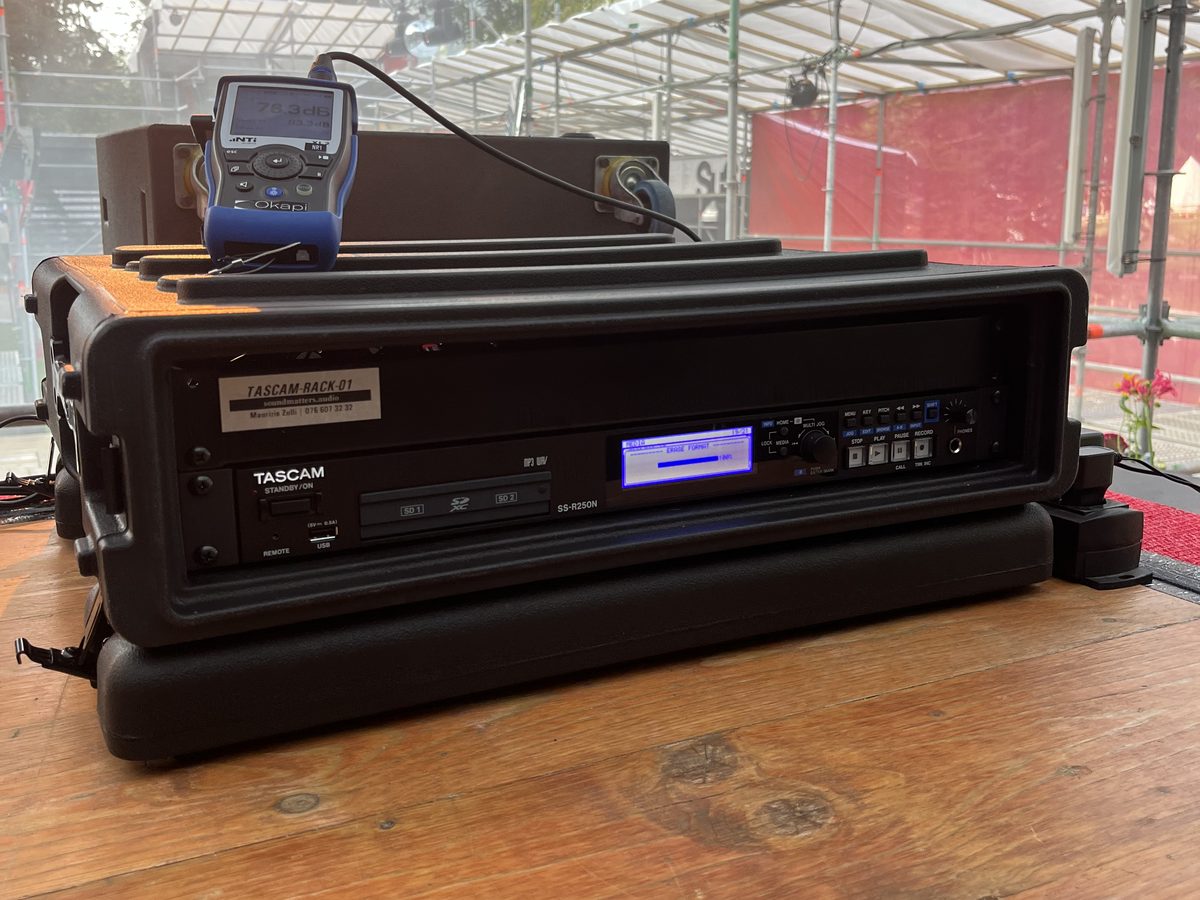
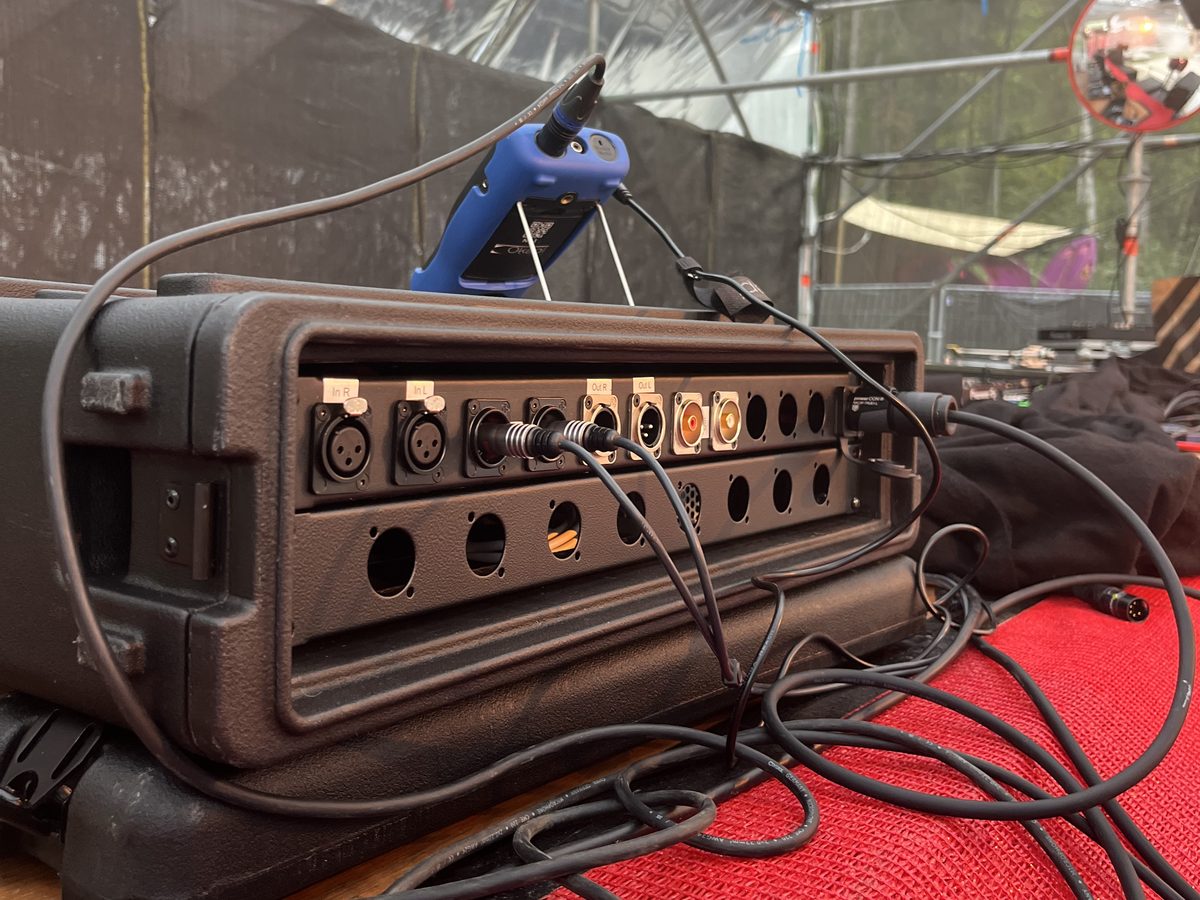
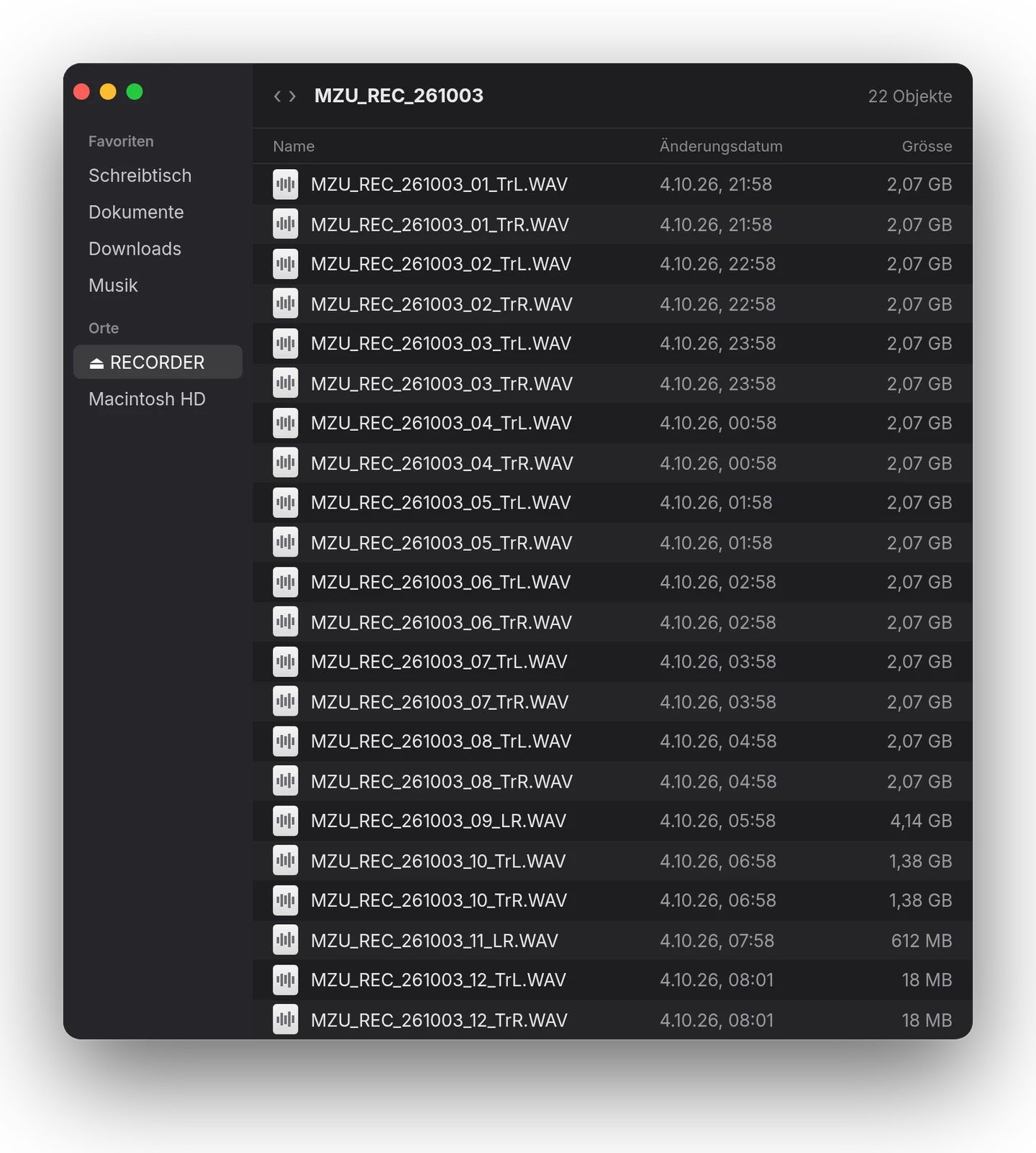
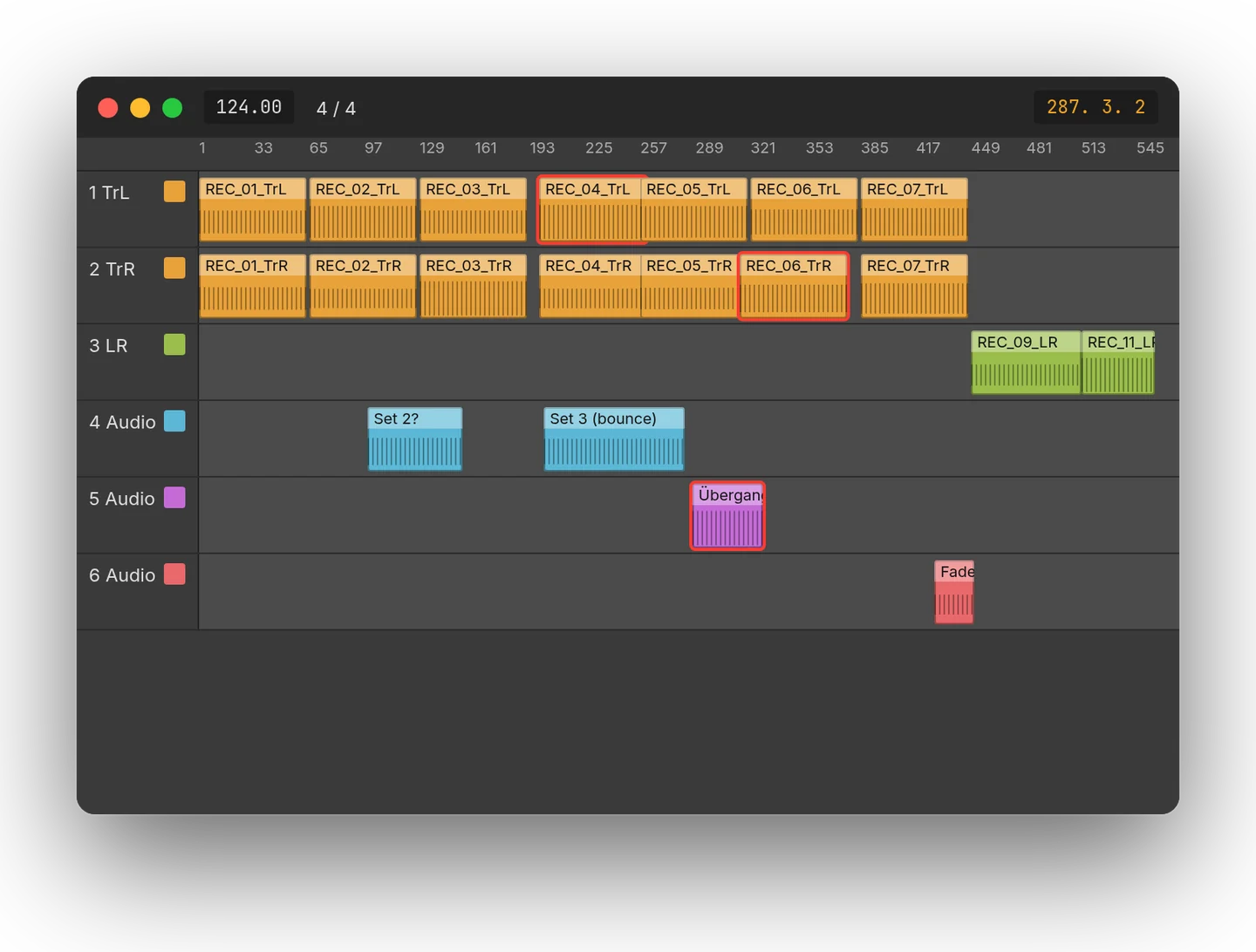
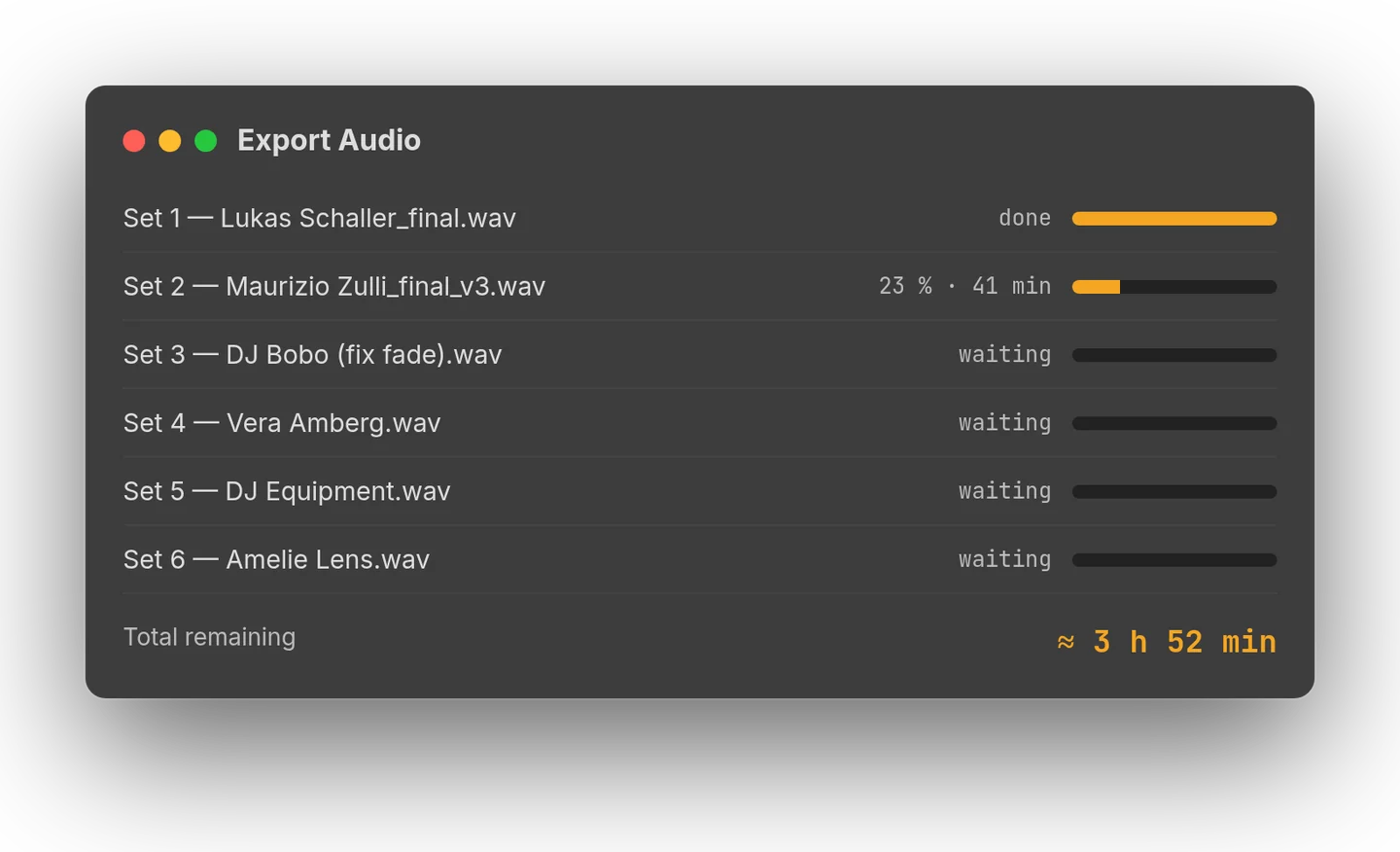
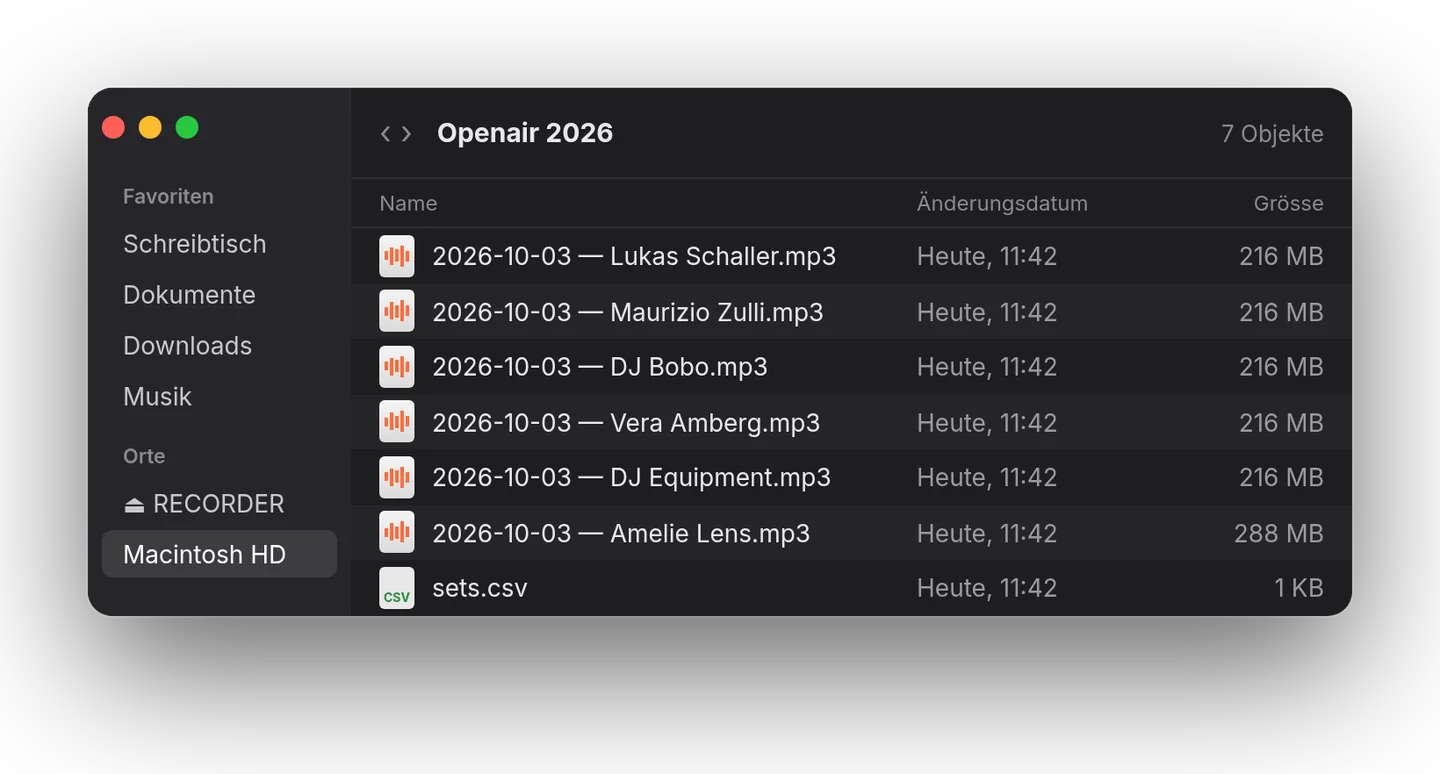
A Tascam SS-R250N in a case, wired straight to the booth output. It runs all night and keeps saving as it goes — pull the plug and the recording is there up to a moment before, then it picks up again by itself. If a set clips, it sets the marker automatically. And anyone who wants their own set can hang their recorder off the through signal.
The case in use, both SD slots reachable from the frontThe connector panel: in L/R from the booth, out L/R passed through
Heart
Tascam SS-R250N
Channels
2, stereo sum from the booth
After power loss
file saved, recording continues
Backup
continuous, two SD cards in parallel
Markers
automatic on clipping, plus manual
For artists
signal passed through, own recorder can hang off it
Location sound · Bag · Boom
Cables to Measure
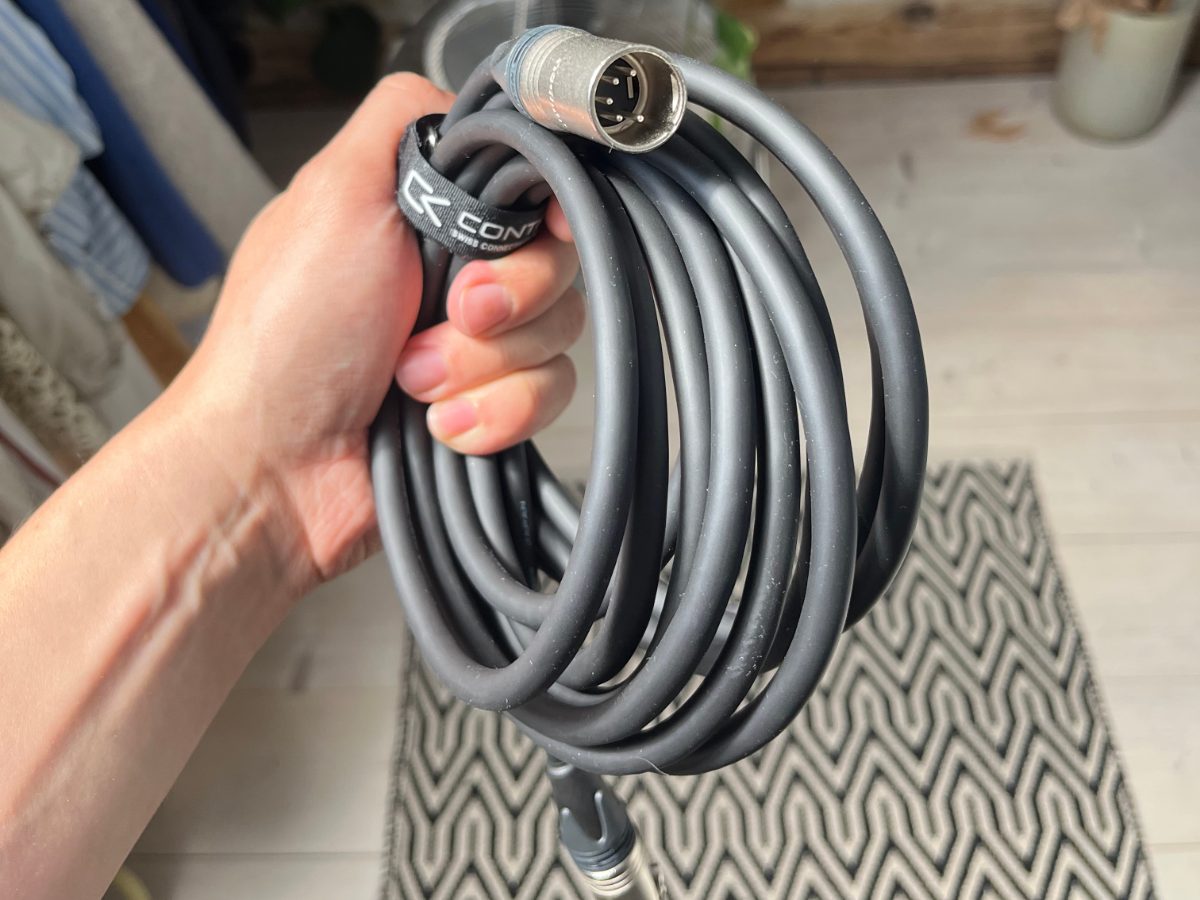
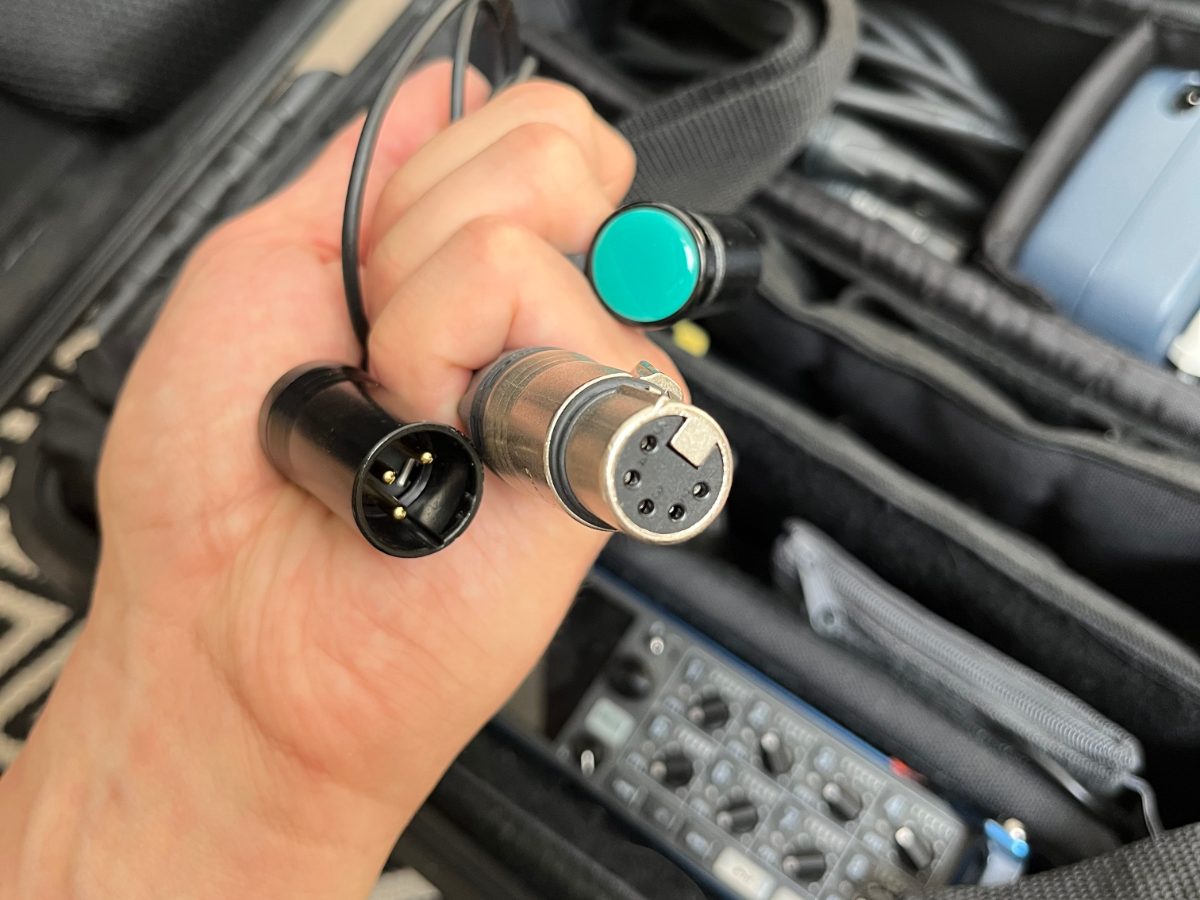
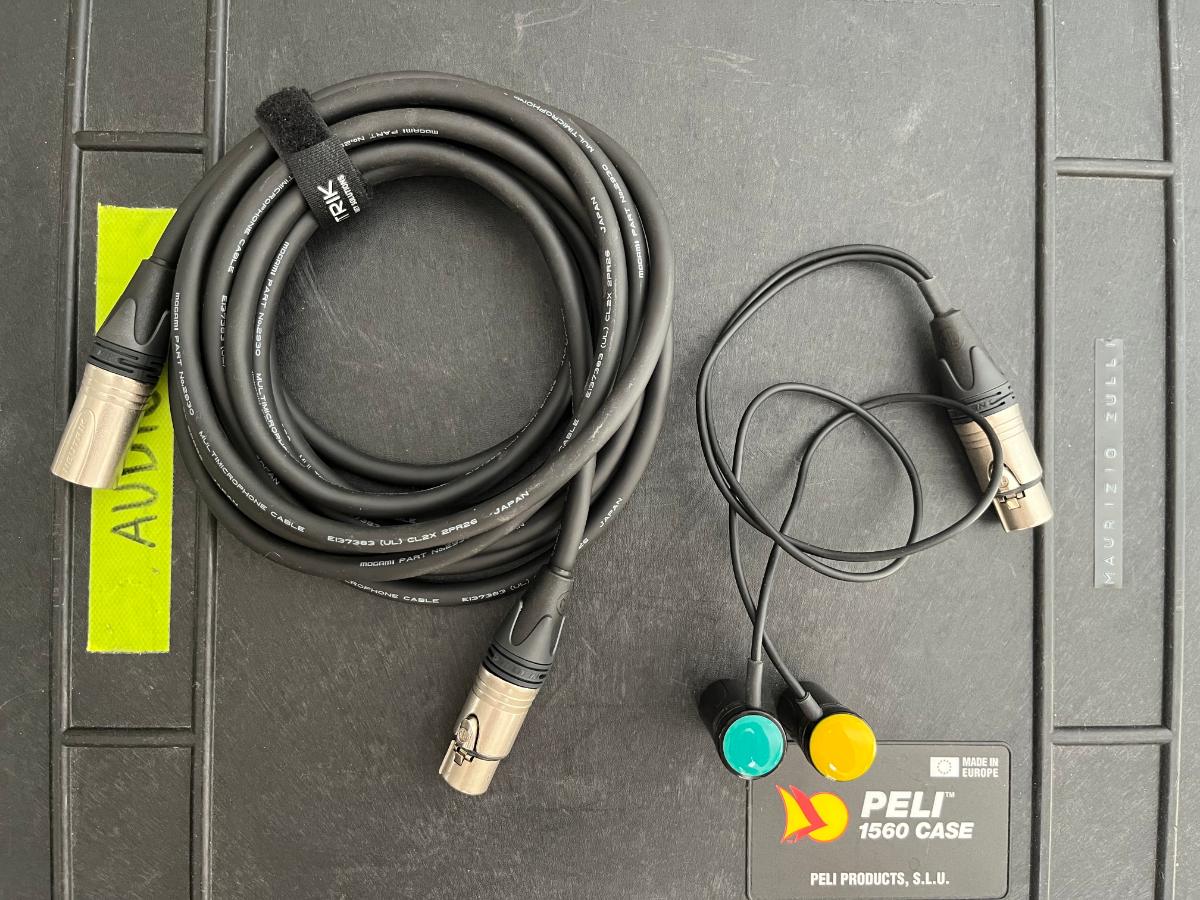
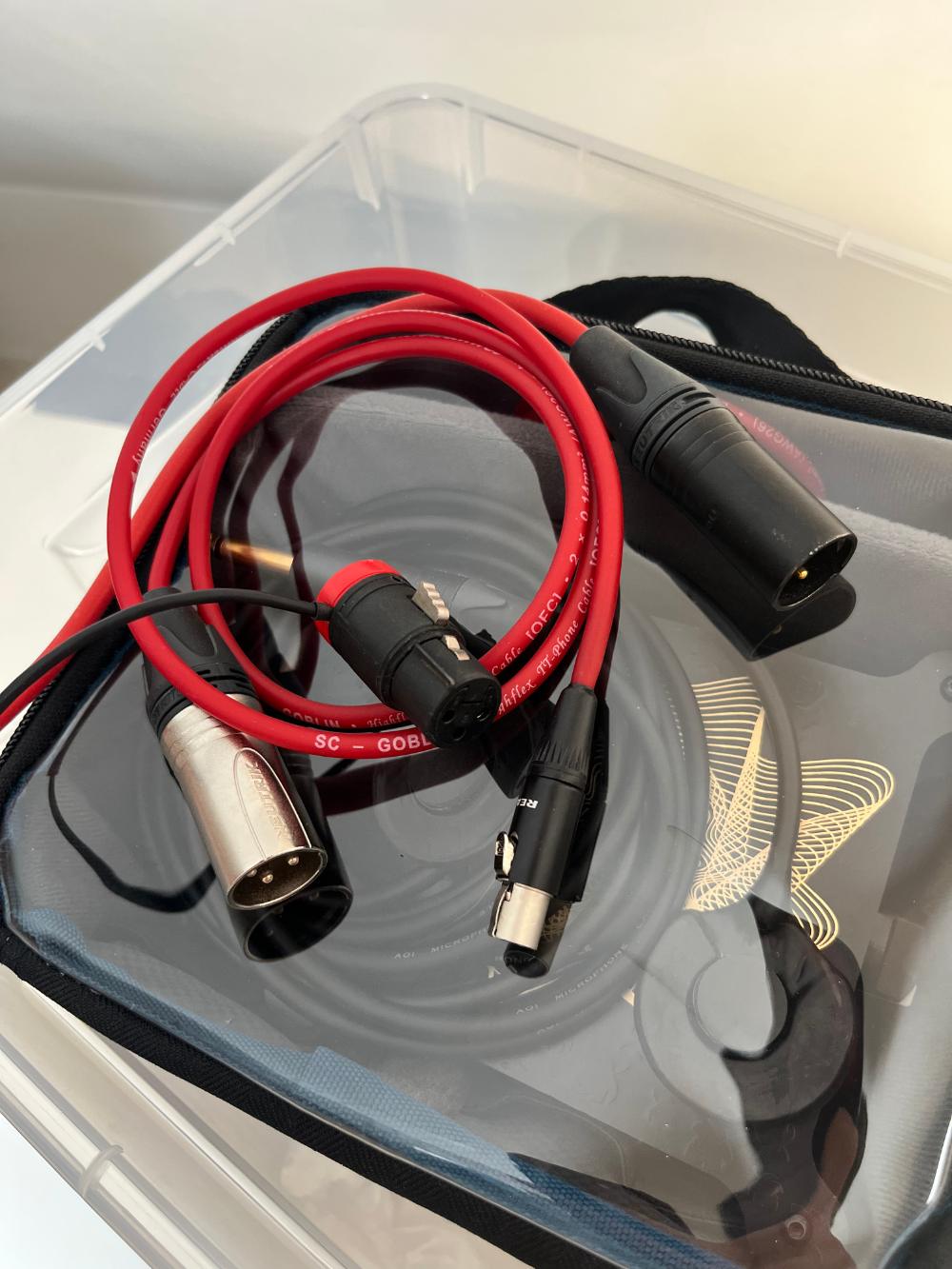
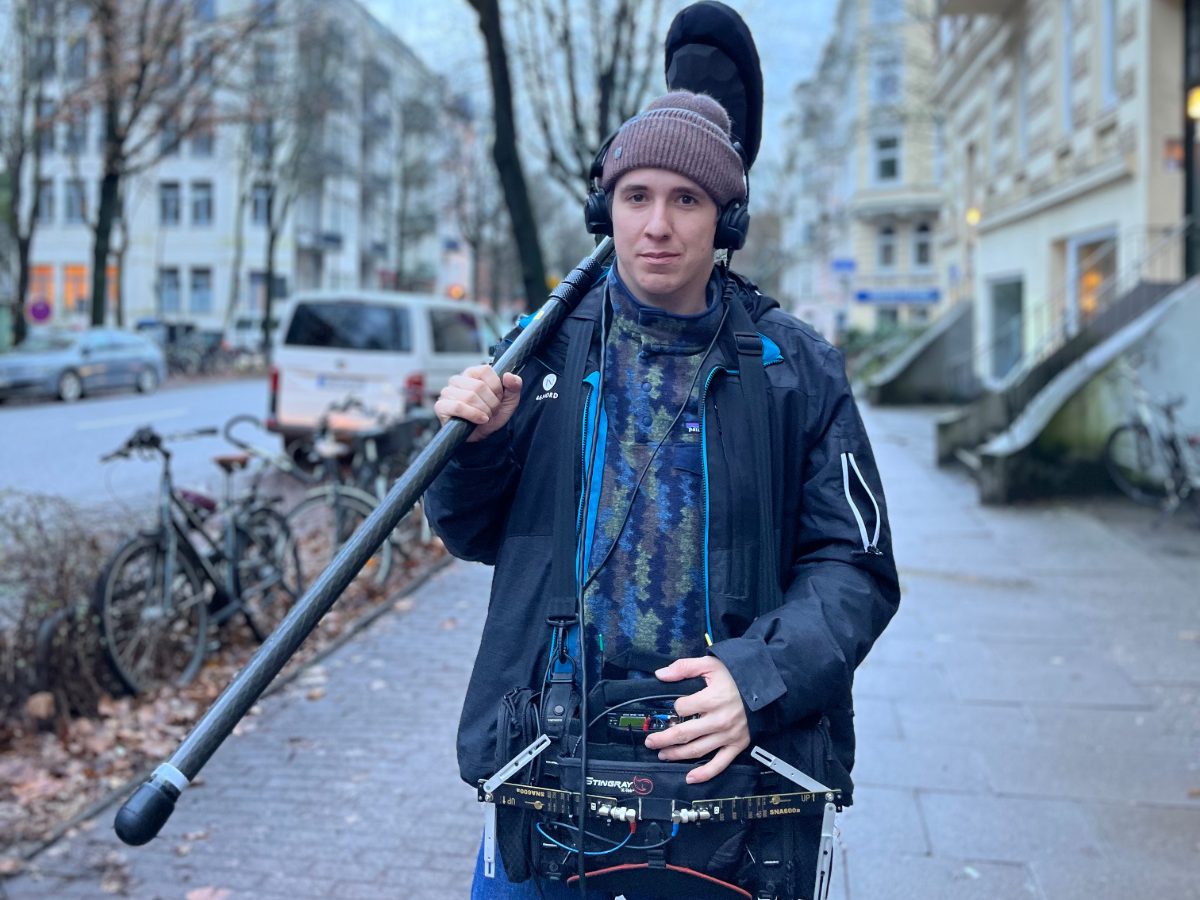
Mogami cable, Neutrik connectors, soldered by hand and every core measured individually. Five-pin for mid/side on the boom, a breakout from five-pin to two low-profile three-pin connectors for the recording bag, extensions for ambisonic rigs, plus adapters between connector worlds that refused to fit. Mogami, because it passes on almost no handling noise inside a bag and still lies soft in the hand after a hundred shooting days.
Five-pin for mid/side, cut to lengthFive-pin to three-pin, low profile for the bagBoom cable and breakout, as they sit in the caseAdapters between connector worlds, also made to measure
Cable
Mogami, star-quad
Connectors
Neutrik, low-profile in the bag
Built
mid/side, breakouts for the bag, adapters, extensions
Why Mogami
little handling noise, stays supple
Testing
every core measured individually
Length
to measure, not to catalogue
Post-production · macOS
ParanoidQC
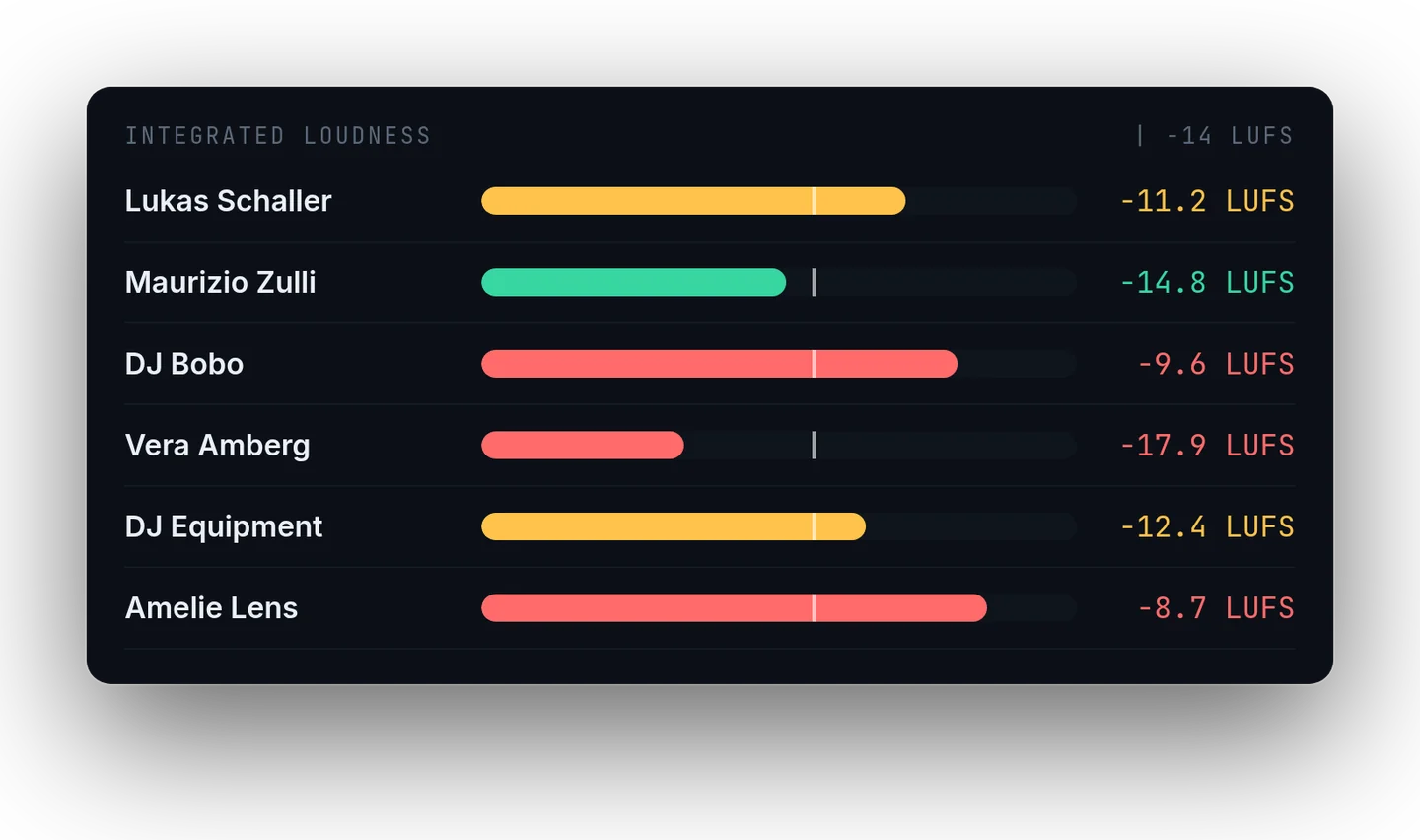
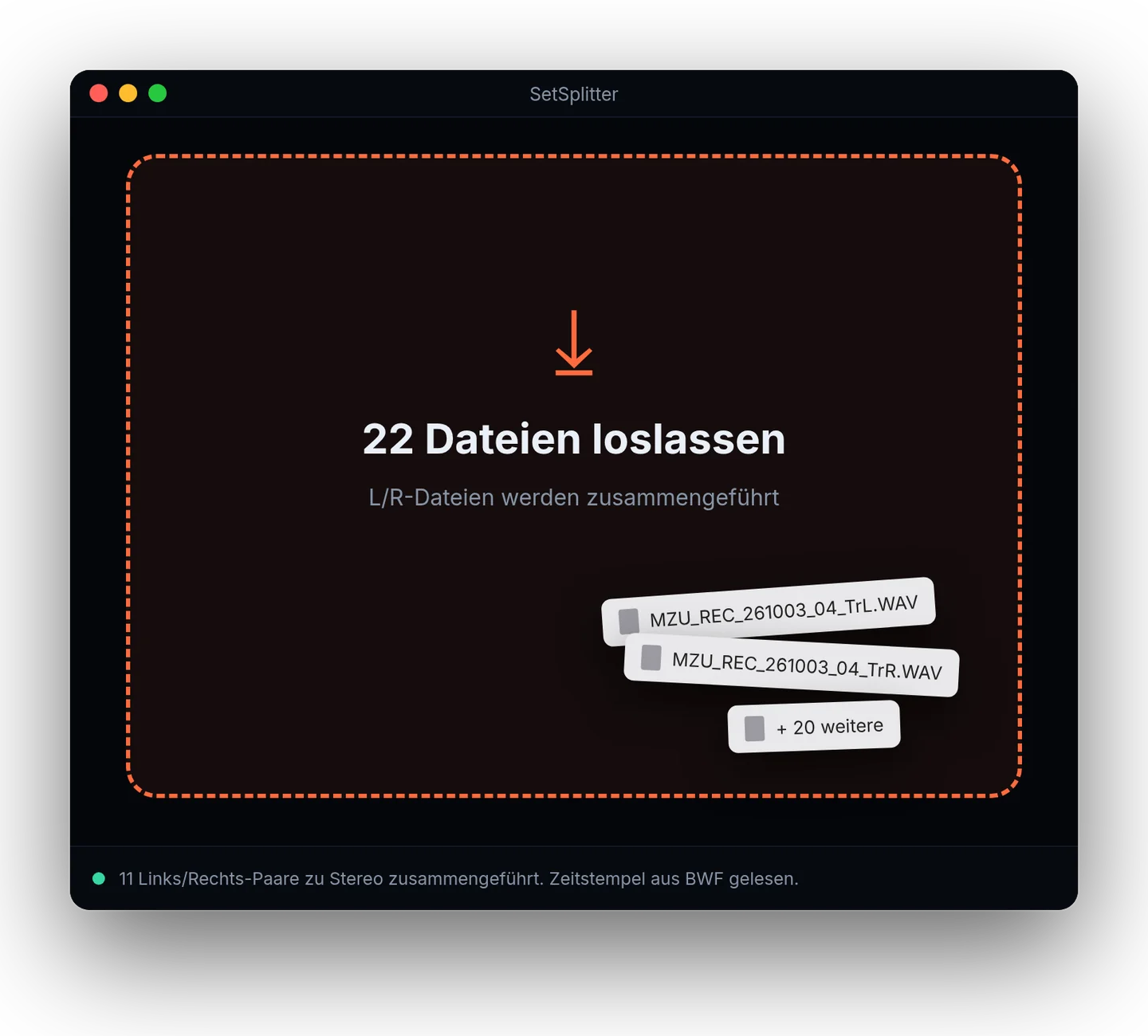
Built against the trouble that always starts the same way: the finished stereo mix comes back as dual mono, or it is suddenly too quiet. Drag the file into the window and the app checks it against a delivery profile — levels, loudness, channels, format. Pass, warning or fail, with a timecode for every finding. Nothing is uploaded; it all runs locally.
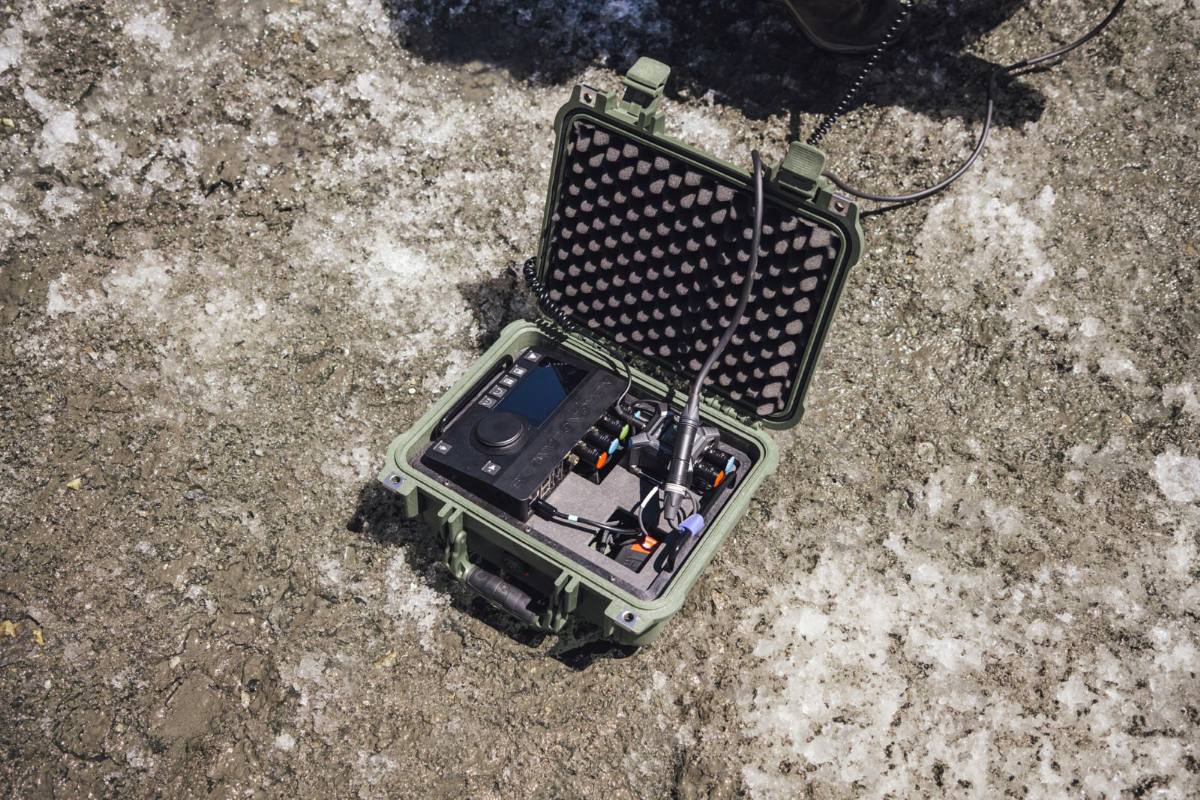
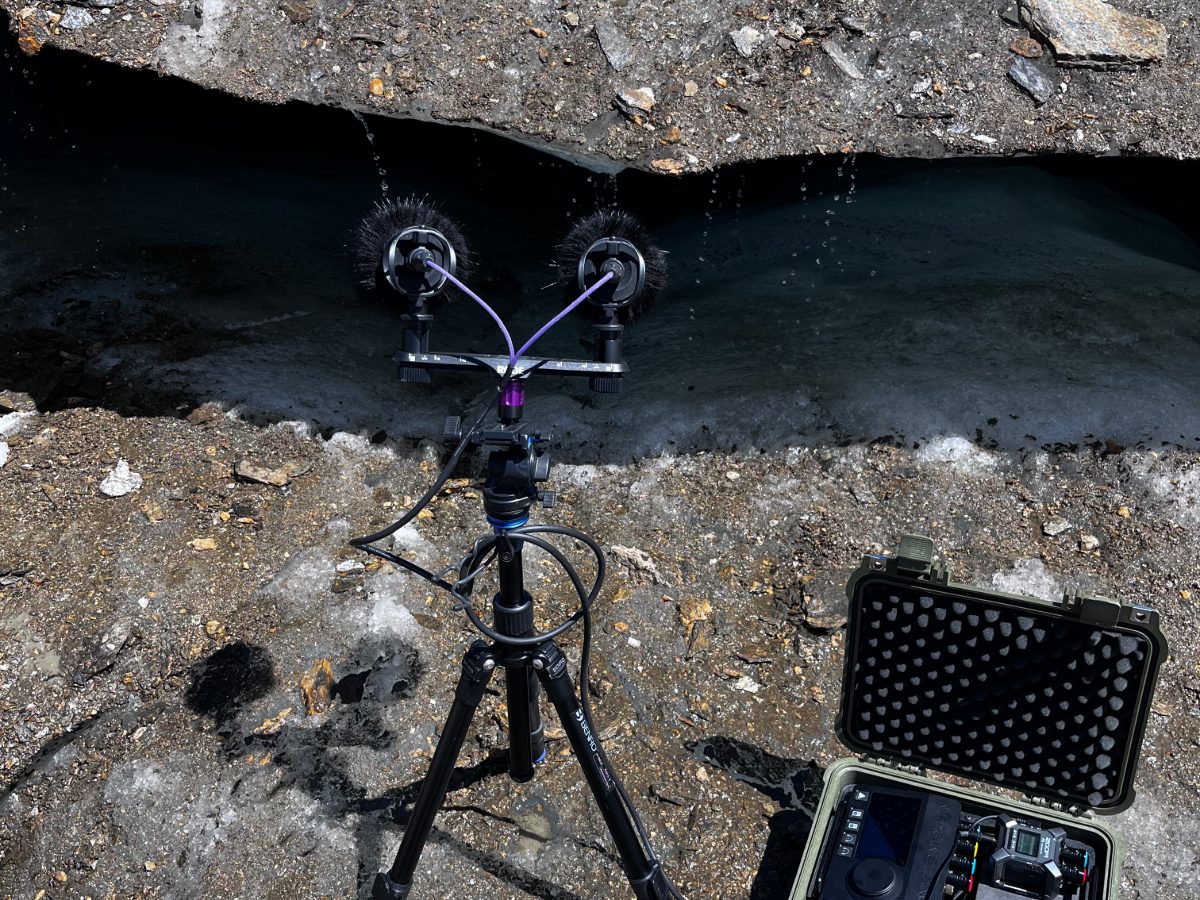
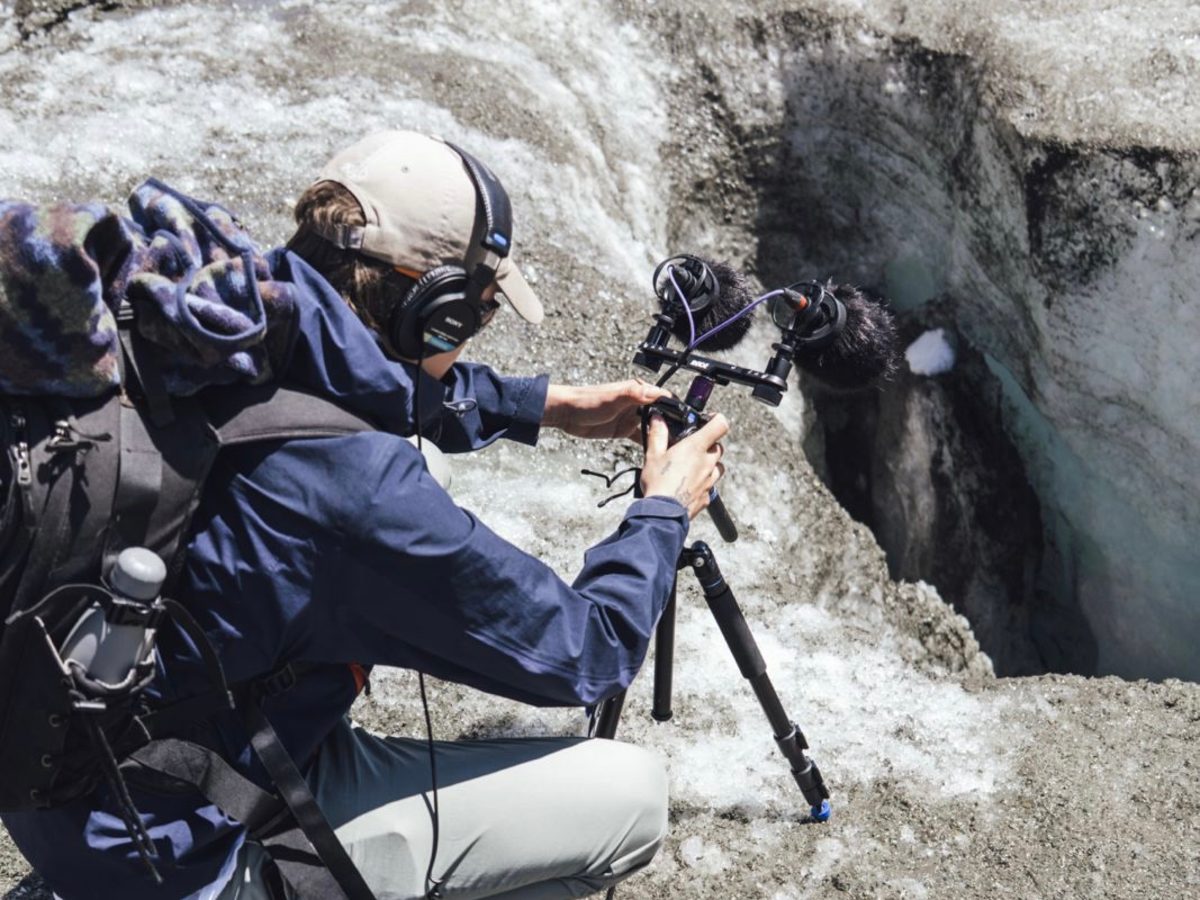
A Peli 1400 built out for the Merging Anubis SPS Premium — preamp and monitor controller in one, carried up the Gries Glacier. Power comes from SWIT NP-1 batteries; a powerCON lets the case run and charge at once, and in the field the battery takes over seamlessly. Two paths, one recording.
Peli 1400 with the Anubis, on the Gries Glacier
Case
Peli 1400, built out by hand
Heart
Merging Anubis SPS Premium
Capture
Zoom F3 with LOM Ucho microphones
Power
SWIT NP-1, powerCON for mains
Redundancy
seamless battery takeover
Cabling
Mogami, inside and out, self-built
04 — Field Recording
The Recordings
I record what is needed: location sound on set, voice-over, atmospheres and nature outdoors, whole festival nights in one go. The place decides the rig, not the other way round.
Recordings for research, documentary and sound libraries
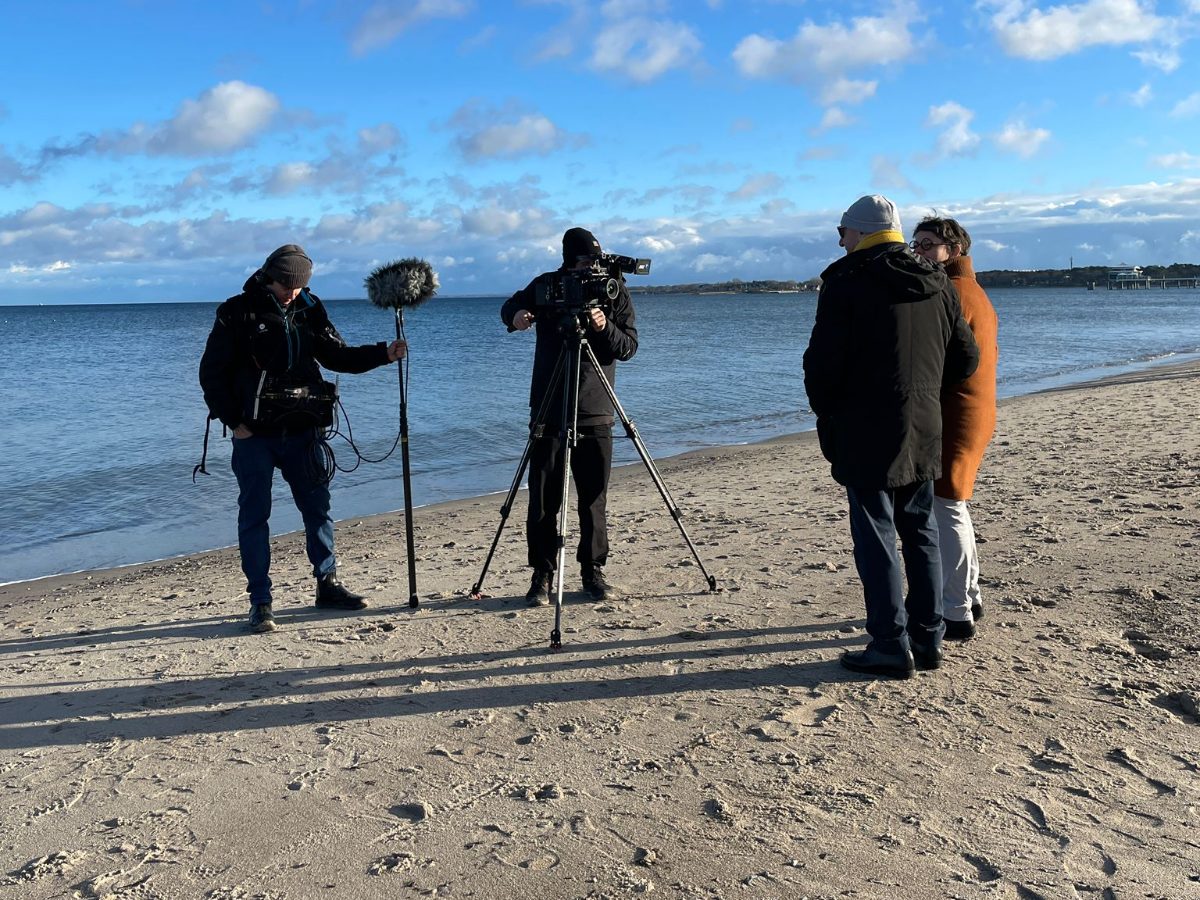
Location sound for documentary and commercials
What I record
Stereo and mid/side, resonances with contact mics, atmospheres and nature, foley and sound effects, voice-over and podcast — and concerts, events and whole festivals.
Cable car, hanging
Contact mic on the carrying rope. A kilometre of tensioned steel cable is a string, you only have to touch it. Sounds like a bass nobody ever built.